


Professional protection against electrical risk
Live Line Work (LLW) is “the activity in which a worker makes contact with energised parts or encroaches inside the live working zone with either parts of his or her body or with tools, devices or equipment”.
Definition provided by the International Electrotechnical Commission.
Necessary Conditions For Working Safely
Live Line Work must be carried out by suitably trained and qualified workers, equipped with special tools for the work required to be performed, strictly in accordance with carefully designed and verified written procedures and methods.
The tools used in Live Line Work are specifically designed for this kind of work, made with materials particularly suited to their intended purpose, especially as regards, insulation, resistance and functionality.
Methods Live Line Work
There are three different live working methods
Normally used in distribution or medium voltage systems, but also used for transmission systems.
The linesmen work from ground potential, always observing safety clearances from the energised parts they are working on and any other energised parts in the work area.
They use tools suitable for the tasks required, fitted to the end of insulated hotsticks of sufficient length to enable linesmen at all times to maintain the safety clearances required for the voltage they are working at.
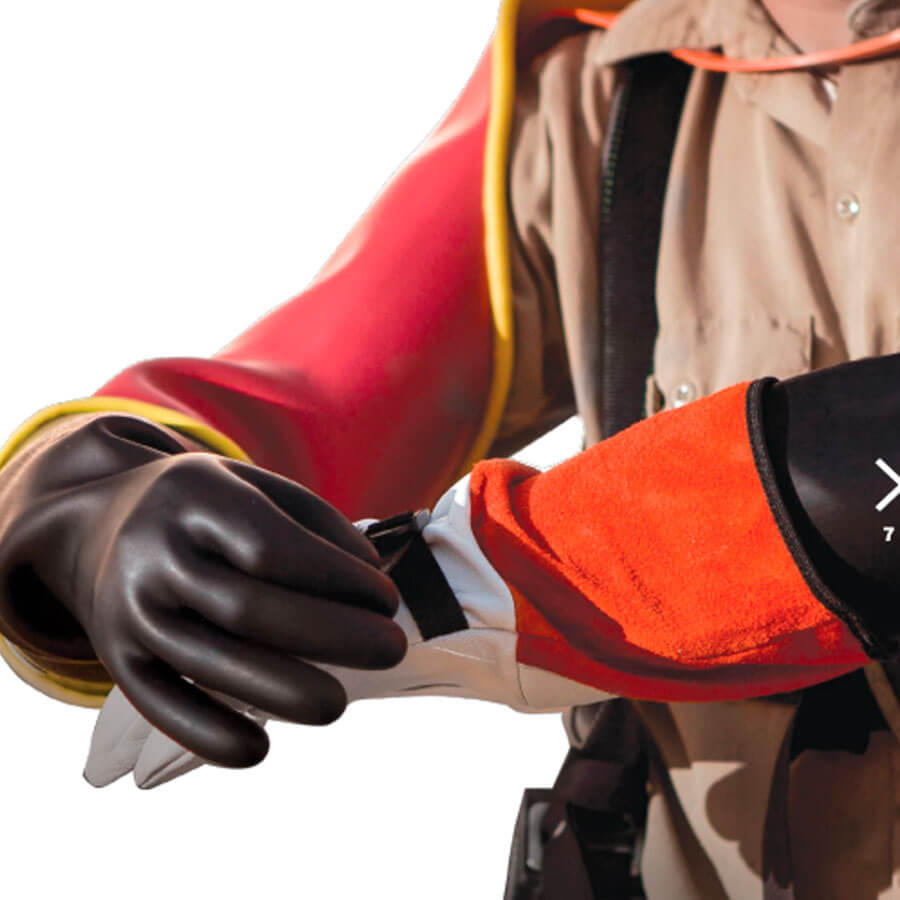
This is used mainly in low voltage work, and currently more often in distribution. The workers work directly on the energised parts with their hands protected by insulated rubber gloves suitable for the system rated voltage, standing on insulated stools or insulated mats for low voltage work, or on insulated elevating platforms or insulated ladders for distribution voltages.
The hand tools used are covered with suitable insulating material. They can only be used on systems up to 36 kV, as no gloves for higher voltages are available. The rubber used to manufacture the gloves must be as flexible as possible to make them comfortable for workers
This is used for work at transmission voltages, usually in combination with hotstick work, as the distances required in transmission systems make it difficult to work exclusively with insulated hotsticks. The linesmen work directly in contact with the energized parts, from an insulated ladder or an elevating platform with an insulated boom, which keeps them insulated and at a suitable safety clearance from any parts at different potential in the work area. Due to induction by the electric field of the energized parts and in order to avoid its influence, barehand workers must be equipped with a full conductive suit, complete with conductive socks, gloves and boots, which will act as a Faraday cage.
HISTORY OF LLW IN SPAIN
A.B. Chance, a hotline tool manufacturer based in Centralia, Missouri (USA) , was the first manufacturer of epoxiglas FRP hotsticks and tools.
1964
Chance appoints Hugh de Kobbe as their exclusive distributor for Spain, who introduces and initiates the approval of LLW in Spain.
March 1968
Hugh de Kobbe and Mike Porter from Chance tour Spain to make recommendations for LLW on different installations
May 1968
First live work demonstration in Spain (replacement of wooden pole in Dos Hermanas, Seville carried out by Cobra) on a 25KV line.
1971
An article is added to the General Ordinance of the Institute of Safety and Hygiene at Work allowing Live Line Works.
1972
Creation of Kobbeco SA, which organizes trips to the US for electrical utility companies and contractors to undergo training.
1974
Kobbeco places orders for Chance tools for Spanish companies.
1981
First sales of insulated aerial devices in Spain by Kobbeco for live line work using rubber gloving method.
2008
Kobbeco sets up the first independent dielectric testing laboratory in Spain, Kobbecolab, in order to be able to keep a stock of insulated gloves locally (and conduct dielectric tests as a sales and post-sales service).
2009
Kobbeco sells the first insulated aerial devices in the Spanish market in compliance with EN280 according to the European Machine Directive.
2012
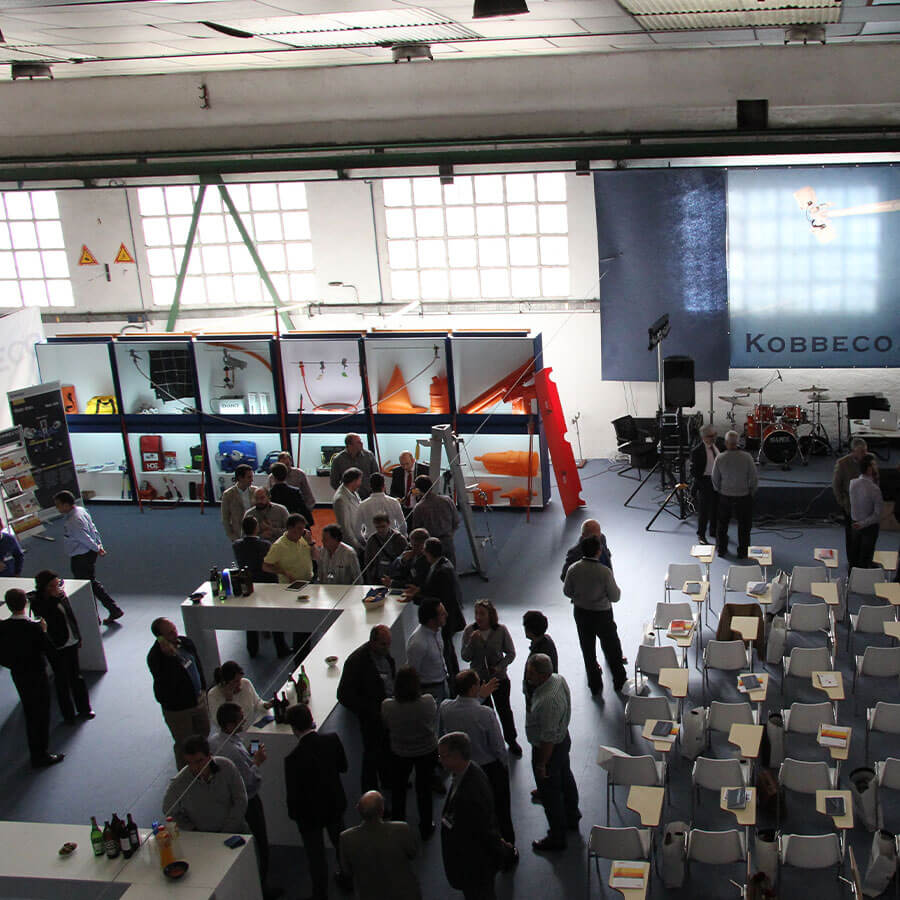
Kobbeco inaugurates the biannual JoteKse conferences in which new techniques, methods, and materials for live work, arc protection, and working at height safety are introduced.
2016
Creation of Kolab as a company dedicated to services (with a central laboratory and mobile units to carry out dielectric retests, maintenance, repair of live line tools and insulated aerial devices, training, etc.).
Tools and PPEs for LLW
Working with products of the highest quality and pioneering brands in the development of LLW, Kobbeco collaborates with manufacturers and users to provide necessary solutions in the evolution of LLW.
HOIST
Manual hoists: robust, safe and easy to use.
Load handling Accesories
Accessories for effective, safe load handling.
Cover-up Equipment
Detector and emergency response system
Compass Pro: detection and emergency response system for electrical safety.
Insulated jumper sets
Insulated jumper sets
Mobile Towers
Insulated solutions for working at height with energised elements.
Silicon Lubricant
Clean and safe dielectric lubricant.
Insulated Aerial Devices
Since 2007, we offer CE marked insulated aerial devices in compliance with European and ANSI/SIA A92.2-2015 American standards.
Kobbeco has a wide range of accessories for different types of insulated aerial devices: truck bodywork, liners (interior lining for the basket), tool holders and trays, flexible buckets covers and rope.
After-Sales Service
We offer an external after-sales service for testing, maintenance, and repair of insulated aerial devices. For minor maintenance and repairs, these services can be performed at the customer’s facilities.
Over 50 years promoting electrical safety
Our experience supports us. Discover how our equipment and JOTEKSE technical seminars can help you work with peace of mind.